A compreensão dos registros paroquiais portugueses: Batismos, Casamentos e Mortes
Portuguese parish records are among the most important sources for family history research in Portugal and the Azores.
For many families, these records make it possible to trace ancestors back several generations, sometimes long before civil registration became widely used.
The three main types of parish records are:
- Baptism records
- Marriage records
- Death or burial records
Each type can provide different clues about a person and their family.
What Are Portuguese Parish Records?
For centuries, Catholic parishes recorded important events in the lives of their parishioners.
These registers were usually kept by the local parish priest and organized by parish.
Because of this, identifying the correct parish is often essential when researching Portuguese ancestors.
A record may contain much more than a simple name and date. Depending on the period and location, it may include information about parents, grandparents, spouses, occupations, residences, places of origin, witnesses, godparents, and other relatives.
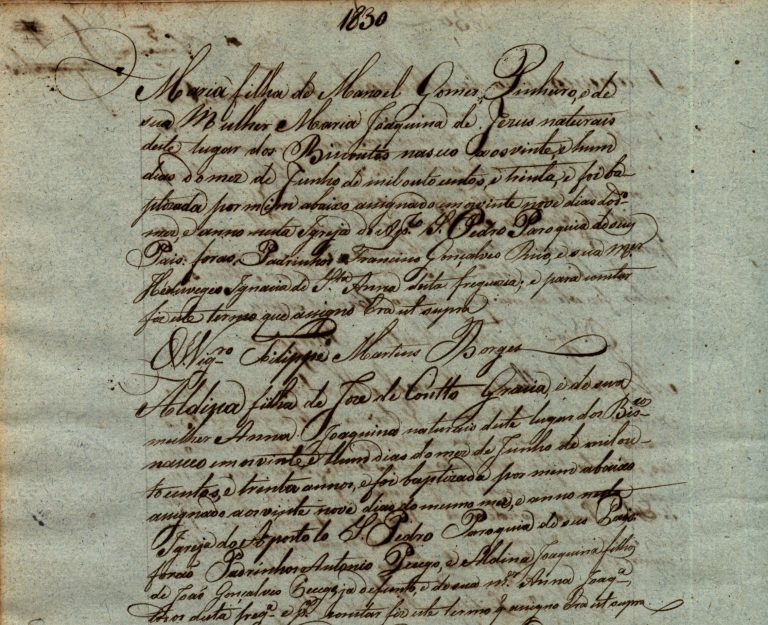
Baptism Records
Baptism records are often one of the most useful sources in Portuguese genealogy.
A baptism record may include:
- Child’s name
- Date of birth
- Date of baptism
- Os nomes dos pais
- Parents’ marital status
- Parents’ places of origin
- Names of paternal grandparents
- Names of maternal grandparents
- Godparents
- Local de residência
- Father’s occupation
This information can sometimes allow a researcher to identify two additional generations from a single record.
Why Baptism Records Matter
Before modern civil birth registration, baptism records were often the main written record of a child’s birth and family relationships.
They can also help distinguish between people with similar names.
For example, two individuals named Manuel Silva may have lived in the same parish, but their parents, grandparents, godparents, or place of residence may reveal that they belonged to different families.
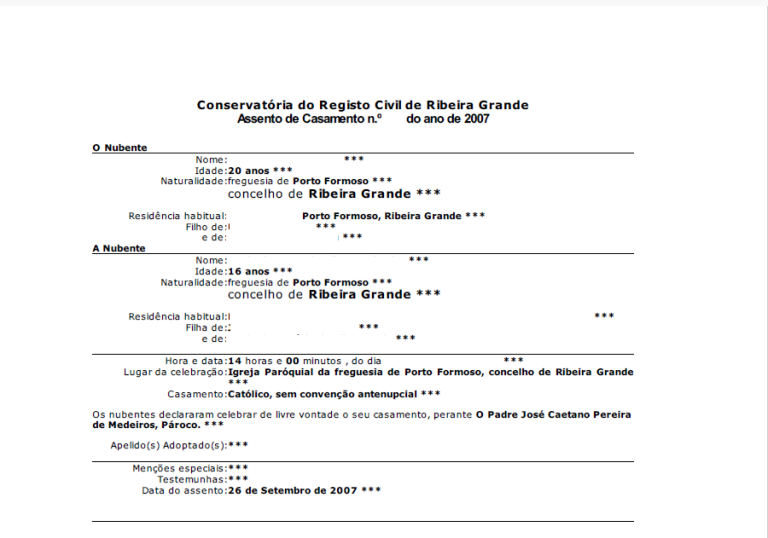
Registros de Casamento
Marriage records are especially valuable because they bring together information about two family lines.
A Portuguese marriage record may include:
- Os nomes completos da noiva e do noivo
- Idades
- Birthplaces
- Locais de residência
- Parents’ names
- Whether the parents were living or deceased
- Histórico de estado civil anterior
- Testemunhas
- Ocupações
Some marriage records may also mention dispensations, degrees of relationship, previous marriages, or other details useful for genealogical research.
Marriage Records Can Reveal Family Origins
Marriage records are often one of the best sources for identifying where an ancestor originally came from.
A person may have married in one parish but been born in another parish, municipality, island, or region.
That information can provide the clue needed to continue the research in a different location.
Death and Burial Records
Death records can vary considerably in the amount of information they contain.
Some provide only a name, approximate age, and date of death. Others contain much more detail.
A death or burial record may include:
- Nome
- Date of death
- Idade
- Situação conjugal
- Nome do cônjuge
- Parents’ names
- Local de nascimento
- Residence
- Occupation
- Burial location
- Cause or circumstances of death
For older records, information about parents may be less complete, especially when the deceased was elderly.
Why Ages in Old Records May Not Be Exact
Researchers should be careful when using ages from older Portuguese records.
Ages were sometimes approximate, especially in death records.
Someone recorded as being 70 years old may have been slightly younger or older.
For this reason, age should usually be treated as a clue rather than absolute proof unless it is supported by other records.
Portuguese Parish Records Can Be Difficult to Read
Older parish records were handwritten, and the handwriting style can be challenging.
Researchers may encounter:
- Old Portuguese spelling
- Latin expressions
- Abbreviations
- Difficult handwriting
- Faded ink
- Damaged pages
- Missing sections
- Changes in surname spelling
Understanding the structure of these records becomes easier with experience, because priests often followed similar formulas when writing baptism, marriage, and death entries.
Names Can Change Between Records
One of the most common difficulties in Portuguese genealogy is variation in names.
The same person may appear under slightly different names in different records.
A surname may be added, omitted, reordered, or spelled differently.
Women may also appear under different combinations of family surnames.
Because of this, researchers should compare all available information rather than relying on the name alone.
Important details include:
- Parents
- Spouse
- Residence
- Occupation
- Idade
- Godparents
- Testemunhas
Godparents and Witnesses Can Be Important Clues
Godparents and marriage witnesses were often relatives, neighbors, or close family associates.
Their names can help identify connections between families and distinguish individuals with similar names.
In some cases, these people can provide clues when direct family information is missing.
The Importance of the Correct Parish
Portuguese parish registers are organized geographically.
Knowing the municipality is helpful, but knowing the exact parish is usually much better.
For example, a researcher may know that an ancestor came from São Miguel in the Azores, but São Miguel has many parishes.
Finding the correct parish can significantly reduce the time required to locate the right record.
What If the Parish Records Stop?
Not every parish register survives indefinitely.
Records may end because of:
- Missing books
- Fire or deterioration
- Historical gaps
- Changes in record-keeping
- Records not yet digitized
When parish records are no longer available, research may continue using other sources such as:
- Civil registration
- Wills
- Notarial records
- Property records
- Court documents
- Military records
- Immigration records
- Historical publications
Verify Information With Original Records
Online family trees can provide useful clues, but they may contain mistakes.
Whenever possible, genealogical information should be verified using original records or reliable copies of original records.
This is especially important when several people in the same parish share similar names.
Need Help Understanding Portuguese Parish Records?
At Fagundes Genealogy, we research Portuguese and Azorean parish records and can help with:
- Baptism records
- Marriage records
- Death records
- Family reconstruction
- Portuguese transcription
- English translation
- Identifying ancestral parishes
- Extending family lines through original records
If you have Portuguese or Azorean ancestors and want help understanding historical parish records, contact Fagundes Genealogy to begin your research.