Registro Civil Português: Guia para Iniciantes
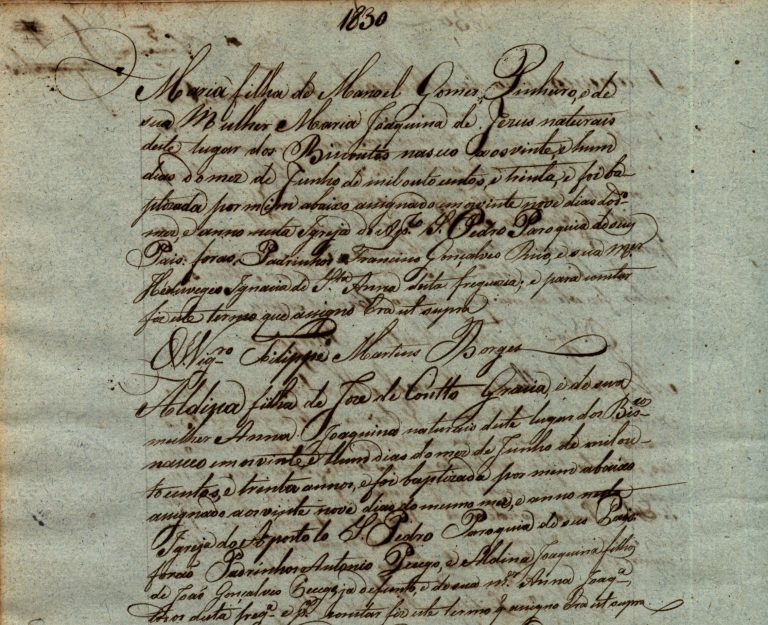
Os registos de registo civil portugueses são uma fonte essencial para a investigação da história familiar em Portugal e nos Açores.
Embora os registros paroquiais sejam especialmente importantes para as gerações mais antigas, o registro civil se torna cada vez mais valioso para os antepassados mais recentes.
Esses registros podem fornecer informações sobre nascimentos, casamentos, mortes, pais, cônjuges, ocupações, residências e locais de origem.
O que é o registro civil?
O registro civil é a inscrição oficial dos acontecimentos vitais realizada pelo Estado.
Em Portugal, estes registos incluem:
- Nascimentos
- Casamentos
- Óbitos
Esses registros são geralmente criados por um escritório do Registro Civil, e não por um padre da paróquia.
Para pesquisas genealógicas, os registros civis são especialmente úteis quando os registros paroquiais não estão disponíveis, são incompletos ou são muito recentes para serem mantidos em arquivos históricos.
Registros de nascimento
Os registros de nascimento portugueses podem conter:
- Nome completo da criança
- Data e local de nascimento
- Os nomes dos pais
- Idades ou profissões dos pais
- Local de nascimento dos pais
- Local de residência
- Nomes dos avós
- Detalhes da declaração
Dependendo do período, alguns registros podem incluir notas adicionais adicionadas posteriormente.
Essas anotações marginais podem às vezes registrar um casamento, um divórcio ou uma morte.
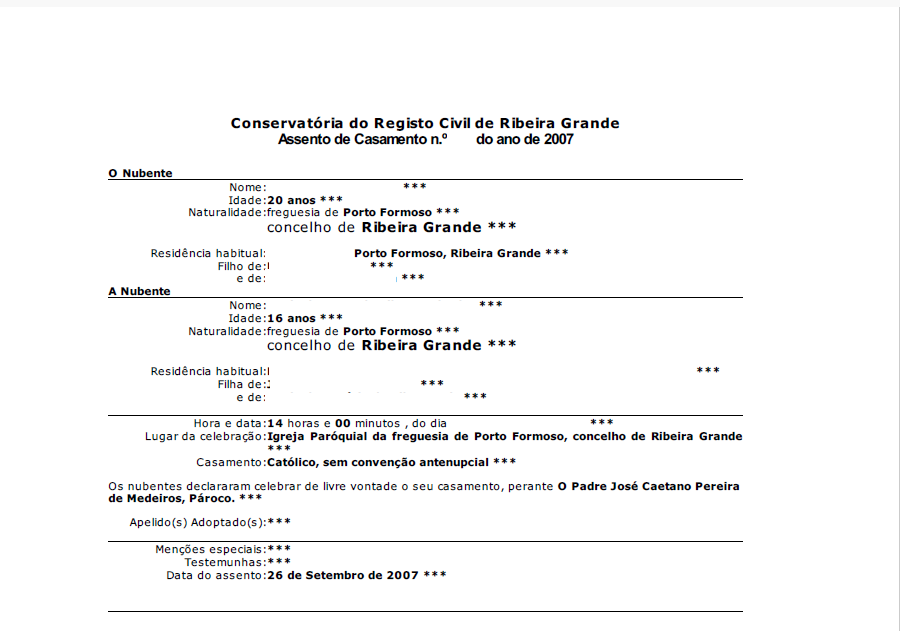
Registros de Casamento
Os registros civis de casamento podem ser extremamente valiosos para a genealogia.
Esses fatores podem incluir:
- Os nomes completos da noiva e do noivo
- Idades
- Datas e lugares de nascimento
- Locais de residência
- Ocupações
- Nomes dos pais
- Se os pais estavam vivos ou mortos
- Histórico de estado civil anterior
- Testemunhas
Os registros matrimoniais podem muitas vezes ajudar os pesquisadores a conectar duas linhagens familiares e a identificar os locais de origem corretos.
Death Records
Os registros de óbitos em português podem fornecer:
- Nome do falecido
- Data e local da morte
- Idade
- Situação conjugal
- Nome do cônjuge
- Os nomes dos pais
- Local de nascimento
- Residence
- Occupation
- Burial information
As with parish records, the amount of information varies depending on the date, location, and person who reported the death.
Why Civil Registration Is Important
Civil registration is especially important for twentieth-century research.
In many cases, researchers begin with a recent civil record and then work backward into older parish registers.
A birth record might identify parents. A marriage record can provide the parents of both spouses. A death record may confirm a birthplace or spouse.
Together, these records can help reconstruct a family across several generations.
Civil Registration and the Azores
The Azores follow the Portuguese civil registration system.
Records may be associated with a specific municipality and Civil Registry Office.
Knowing the correct island, municipality, and parish can make a major difference when searching for a record.
For example, knowing that someone was born on São Miguel is helpful, but knowing the exact parish and municipality is much better.
Recent Records May Have Access Restrictions
One important difference between historical parish registers and modern civil registration is access.
Older civil records may be available in district or regional archives, while more recent records may remain with Civil Registry Offices.
Access to recent records can be restricted because of privacy rules.
In some cases, a certificate or official copy must be requested directly from the appropriate registry office.
Marginal Notes Can Be Very Valuable
Portuguese civil records often contain marginal annotations.
These notes may have been added years after the original record.
They can include information such as:
- Marriage
- Divorce
- Death
- Name changes
- Corrections
A birth record created many years earlier may therefore contain clues about later events in the person’s life.
Researchers should always check the margins and later annotations carefully.
Names May Appear Differently
As with parish records, names in civil registration can vary.
A person may appear with:
- Additional surnames
- Omitted surnames
- Different surname order
- Spelling variations
This is particularly important when comparing Portuguese records with documents created after emigration.
Always compare other identifying information such as parents, spouse, date of birth, occupation, and residence.
Civil Records and Immigration Research
For descendants of Portuguese immigrants, civil registration can help connect records from another country back to Portugal.
For example, an American death certificate may identify a Portuguese birthplace, while a Portuguese birth record may confirm the parents and exact parish.
Using both sets of records together can be much more reliable than relying on only one source.
What If You Do Not Know the Exact Parish?
If you only know that your ancestor came from Portugal or the Azores, begin with records from the country where they settled.
Useful records may include:
- Naturalization records
- Passenger lists
- Marriage certificates
- Death certificates
- Census records
- Military records
- Church records
Look for references to an island, municipality, parish, or Portuguese place name.
Once the location is identified, Portuguese civil and parish records become much easier to search.
Verify Information Across Multiple Records
One document should rarely be used in isolation.
A strong genealogical conclusion usually comes from comparing several records.
For example:
A birth record may identify parents.
A marriage record may confirm those parents and identify a birthplace.
A death record may confirm the spouse and approximate age.
When these details agree, the identification becomes much stronger.
Need Help Finding Portuguese Civil Records?
At Fagundes Genealogy, we can help research Portuguese and Azorean civil registration records, including:
- Birth records
- Marriage records
- Death records
- Identifying ancestral parishes
- Portuguese transcription
- English translation
- Connecting immigration records with Portuguese sources
- Extending family trees through original documentation
If you are researching ancestors from Portugal or the Azores, civil registration records may provide the evidence needed to continue your family history.