Where to Find Azorean Genealogy Records Online — Complete Guide
Where should you begin your Azorean family history research?
Tracing an Azorean family usually starts with identifying your ancestor’s island, municipality, and parish. A record that says only “born in the Azores” may not be enough to locate the correct baptism or marriage.
Gather full names, approximate dates, parents’ names, places of residence, and immigration documents before you begin. Record the source and reference for every discovery.
1. Azores Archives
The official Azores Archives portal helps researchers locate archival descriptions, collections, series, and historical registers. Not every record has digitized images available online; some require contacting or visiting the holding archive.
Search by parish, place, record type, and approximate year. Save the archival reference so you can find the record again.
2. Azores Digital Library
The Azores Digital Library provides access to digitized historical publications and documents. Local histories, newspapers, and older publications can add important context to your family’s story.
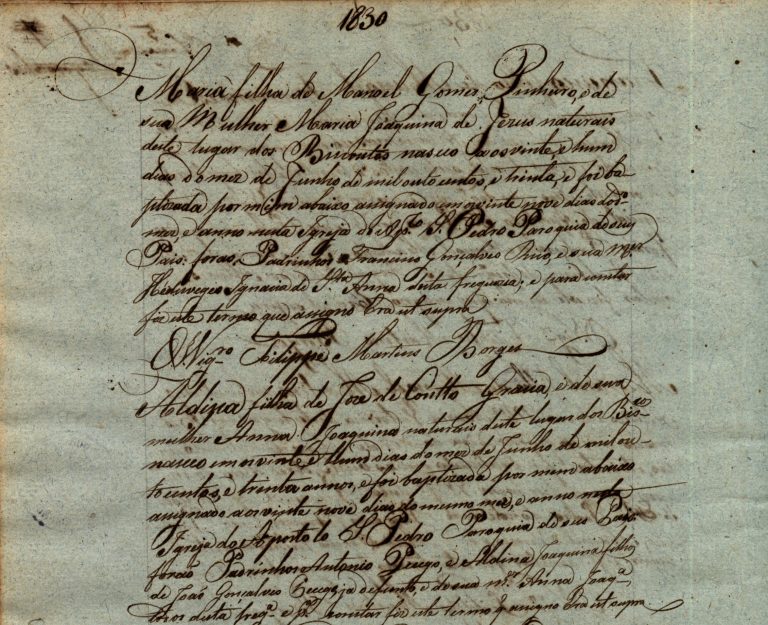
3. Parish registers: baptisms, marriages, and deaths
Parish registers are essential for researching generations before modern civil registration. To understand how to interpret individual entries, see our guides to Portuguese baptism records and Portuguese marriage records. Baptisms may identify parents and godparents; marriages may establish family connections and birthplaces; death entries may help confirm dates and relationships.
Watch for spelling variations, historical handwriting, and family moves between parishes. Dates copied into family trees should always be checked against the original entry.
4. Portuguese civil registration
For more recent events, consult Portugal’s civil registration services. Access to particular records and certificates may depend on the document, its age, and applicable rules.
5. FamilySearch and online indexes
FamilySearch offers catalogs, indexes, and, where available, images of historical records. Treat indexes as finding aids and verify details against the original document whenever possible.
6. Azorean passport and emigration records
Historical passports may reveal an emigrant’s age, occupation, birthplace, parents, destination, and traveling companions. They are especially valuable for families who emigrated to the United States, Canada, or Brazil.
Fagundes Genealogy offers resources relating to historical passport records from the ports of Horta, Angra, and Ponta Delgada. The database is a work in progress: not finding a name does not prove that a person never emigrated.
7. How to verify a match
- Compare the name, age, parents, parish, and dates—not just the surname.
- Look for a second, independent source.
- Record the archive, book, page or image reference, and access date.
- Clearly label uncertain identifications as hypotheses.
A practical archive example: São Pedro and Santo António, São Miguel
For a concrete starting point, the Azores Digital Library identifies a São Pedro (Ponta Delgada) baptism collection covering 1880–1884, under archival identifier SMG-PD-SAOPEDRO-B-1880-1884. Another catalog entry covers baptisms in Santo António, Ponta Delgada, from 1860–1869 (identifier SMG-PD-SANTOANTONIO-B-1860-1869). These are documented examples of collections, not evidence that a particular ancestor appears in them.
- Check place and dates: choose the island, municipality, parish and approximate year before selecting a register.
- Inspect the original images: confirm that the catalog describes baptisms rather than marriages or deaths. Do not rely solely on a name index, which may be incomplete or unavailable.
- Extract the evidence: note the child’s name, baptism and birth dates where stated, parents, godparents, residence and marginal annotations. A baptism date is not automatically a birth date.
- Keep a usable citation: save the institution, parish, record type, date range, collection identifier, image or folio number, link and access date.
- Check a second source: compare findings with a marriage, death or passport record before concluding that two similar names refer to the same person.
When no match appears, verify the likely year and examine neighbouring parishes rather than assuming the family has no records. This method helps turn an online image into a traceable genealogical conclusion.
Need help tracing your Azorean ancestors?
Fagundes Genealogy researches families in the Azores and Portugal, including locating, transcribing, and translating historical records. Contact us to discuss your research.
Note: online availability of collections and images can change. Always check access requirements with the institution holding the records.