How to Identify the Correct Parish in the Azores
One of the most important steps in Azorean genealogy is identifying the correct parish. A record that says only “Azores” or even only the name of an island may not be enough to find the right family.
Why the Parish Matters
Parish registers were maintained locally. Baptisms, marriages, and burials were recorded in the parish where the event took place. To search efficiently, researchers usually need to know the specific parish.
Start With What You Already Know
Collect every document available in the country of immigration: marriage certificates, death certificates, naturalization papers, passenger lists, obituaries, cemetery records, and family correspondence.
Look for Place Names Carefully
A place written in an American, Canadian, Brazilian, or Hawaiian record may be misspelled or simplified. The name may refer to a parish, municipality, island, or nearby locality.
Use Parents and Siblings
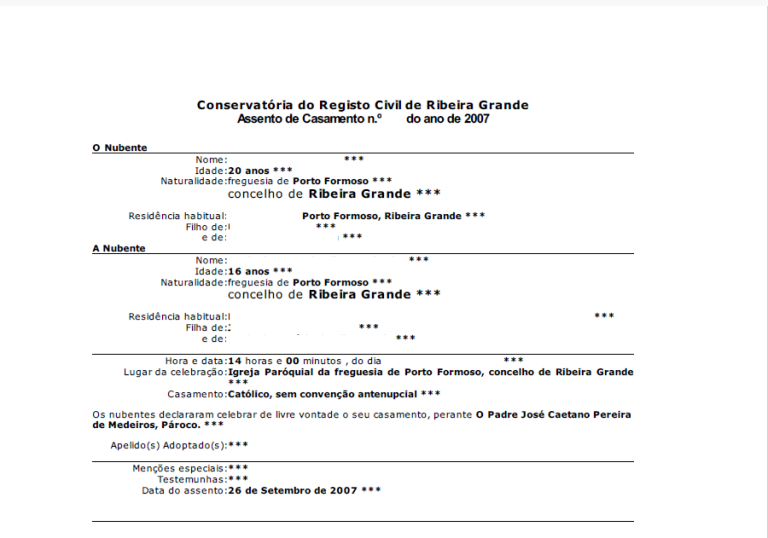
If the immigrant’s own records do not identify the parish, records belonging to siblings may. One sibling’s marriage or death record can sometimes provide the precise birthplace missing from another person’s documents.
Marriage Records Can Be Especially Helpful
Marriage records often preserve more exact birthplace information than later death records. If the immigrant married abroad, locate both civil and church marriage records whenever possible.
Passenger Lists and Passport Records
Portuguese passport records and passenger documentation may identify the place of origin, destination, occupation, age, and sometimes relatives.
Understand Azorean Geography
The same or similar place names may occur on different islands. Always distinguish between island, municipality, parish, and locality.
Check Neighboring Parishes
Families often moved short distances for marriage, work, or land. If the expected parish does not contain the record, neighboring parishes may be the next logical place to search.
Use Cluster Research
Research relatives, godparents, witnesses, and neighbors. A group of immigrants from the same parish often settled near one another overseas.
Avoid Assuming the Parish
Similar surnames are not enough. The same surnames can appear in many unrelated Azorean families. Build the identification from several independent clues.
Finding the correct parish in the Azores: a research checklist
Start a small table with the place names found in each document, the source, the date and how reliable the information seems. Separate the nine Azorean islands from their municipalities and parishes: a name may describe an island, a municipal seat, a parish or a small locality rather than a precise birthplace.
If an overseas marriage certificate gives one place and a passenger list gives another, preserve both readings. Search spelling variants and check whether nearby parishes share the same place name. An emigrant’s siblings, spouse and witnesses may provide the missing geographic clue.
Use the official collections outlined in our guide to finding Azorean genealogy records online once you have a likely parish. Our article about Portuguese passport and emigration records explains how an additional departure record may help corroborate the location.
Before confirming a parish
- Match the person using parents, spouse, dates or other independent evidence.
- Check at least one original parish entry, not just an online index.
- Record the archive reference, register and page for future verification.
- Distinguish confirmed findings from working hypotheses.
Fagundes Genealogy specializes in locating ancestral parishes across the Azores and connecting immigrant families to original Portuguese records.