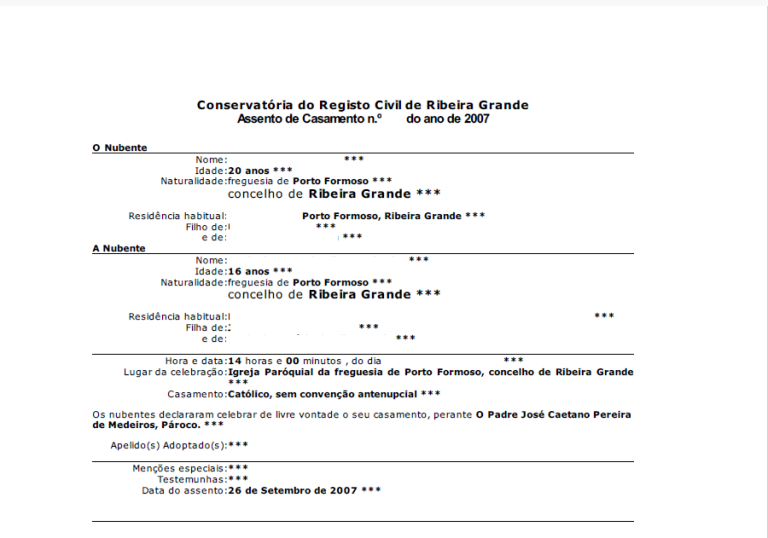
How to Read Portuguese Death Records
Portuguese death records can provide much more than a date of death. Depending on the period and the parish or civil registry, they may identify a person’s age, spouse, parents, birthplace, occupation, residence, burial place, and whether children survived.
Church Burial Records and Civil Death Records
Before civil registration became standard, parish priests recorded deaths and burials. Later civil records generally became more structured and may contain additional identifying information.
Date and Place of Death
The record normally states when and where the death occurred. In parish records, the place may be described as the person’s home, a village, or simply the parish.
Age at Death
Age is useful but should be treated carefully. Ages in older death records can be approximate, especially for elderly people. Confirm the estimate with baptism or marriage records where possible.
Spouse and Marital Status
Words such as casado, casada, viúvo, and viúva indicate whether the person was married or widowed. The spouse’s name may lead to a marriage record.
Parents
Some death records name the deceased person’s parents. This can be extremely helpful, but the information may have been supplied by an informant and should be checked against earlier records.
Birthplace and Residence
A death record may distinguish between the place where a person was born and where they lived, revealing movement between parishes or islands.
Burial Place
The cemetery or burial location may be named. Cemetery information can support further research in gravestones, burial registers, or municipal records.
Children and Testament Information
Older records may mention whether the deceased left children or made a will. These details can point toward probate, notarial, or family records.
Using Death Records to Work Backward
Death records are often useful starting points when an exact birth date is unknown. Age, spouse, parents, and birthplace can help identify the correct baptism or marriage entry.
Portuguese death records: cross-checking an identity
When reading a Portuguese death record, record exactly what the document states rather than estimating a birth year and treating it as certain. The reported age may be rounded or incorrect. Calculate a possible range of birth years, and then compare baptism entries for people with matching parents, spouses or residences.
Pay particular attention to the difference between the date of death, the date of burial and the date the event was registered. These can be separate dates. Likewise, a burial in one parish does not establish that the person was born there. Our guide to Portuguese marriage records can help you connect the deceased to a spouse and earlier household, while the article on Portuguese baptism records explains how to check their original family.
Details worth recording
- All surnames, approximate age, marital status and the informant’s details, where supplied.
- Any stated parents, spouse, birthplace, occupation and address.
- Register or archive, year, book, page and image reference.
- Information missing from the entry, as well as information actually present.
For twentieth-century deaths, civil records may contain later annotations or more structured family details. Read our introduction to Portuguese civil registration after 1911 for the change in record-keeping.
Fagundes Genealogy can help locate and interpret Portuguese and Azorean death records and connect them to earlier generations.