How to Read Portuguese Marriage Records
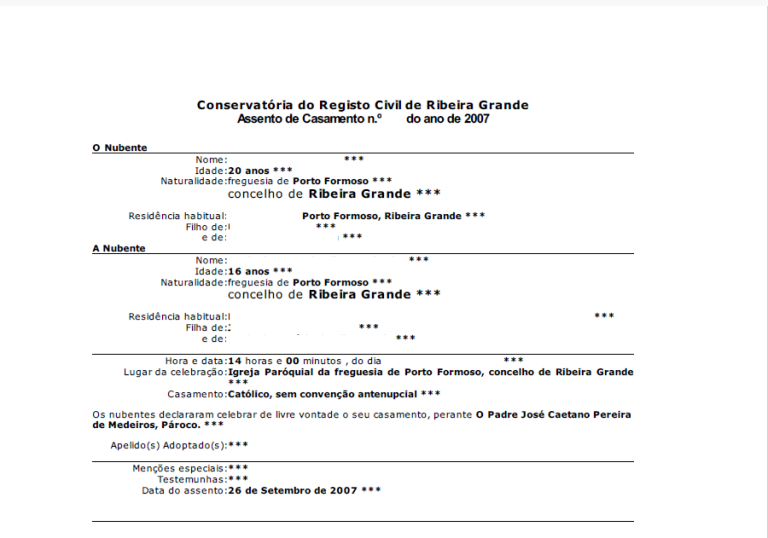
Portuguese marriage records are especially valuable because they bring two family lines together in a single document. A detailed marriage entry may identify the bride and groom, their parents, places of birth, occupations, residence, marital status, and witnesses.
What a Marriage Record May Contain
- Date and place of marriage
- Names of bride and groom
- Idades
- Situação conjugal
- Ocupações
- Birthplaces
- Residence
- Parents’ names
- Se os pais estavam vivos ou mortos
- Testemunhas
- Dispensations or permissions
Finding the Date and Parish
The entry usually begins with the date and the name of the parish church. This confirms where the ceremony took place, but not necessarily where the bride and groom were born.
Bride and Groom
Words such as solteiro e solteira mean single, while viúvo e viúva mean widower and widow.
Parents and Places of Origin
Marriage records often identify the parents of both parties. When the bride or groom came from another parish, the entry may state the exact parish of origin, pointing directly to the next place to search.
Occupations and Residence
Occupations can help distinguish people with common names. Residence information may also show movement between parishes before marriage.
Previous Marriages
If either person was widowed, the record may identify the deceased spouse. This can connect the researcher to an earlier marriage and possibly children from that union.
Testemunhas
Witnesses were frequently relatives, neighbors, employers, or respected members of the community. Their names can help confirm identities.
Dispensations and Consanguinity
Some church marriage records mention dispensations related to degrees of kinship. These references may reveal that the bride and groom shared common ancestors.
Researching an Azorean Marriage
In the Azores, a marriage may have taken place in the parish of the bride even when the groom was born elsewhere. Always pay attention to the stated naturalidade and residence of both parties.
Portuguese marriage records: practical verification tips
Before adding a newly discovered couple to your family tree, make a note of the marriage date, the parish where the ceremony occurred, the full names of both spouses and every place of origin mentioned. Keep the bride’s and groom’s birthplaces separate from their addresses at the time of marriage; they may be different.
Compare each spouse’s parents with the names in their baptism entries. The guide to Portuguese baptism records explains how grandparents, godparents and addresses can help confirm a match. If one spouse came from another island or municipality, use our guide to identifying the correct parish in the Azores before searching the next set of registers.
A simple marriage-record checklist
- Transcribe the exact spelling of each person’s name, including all surnames.
- Record both the place of the wedding and each person’s stated birthplace.
- Check whether a parent was deceased or a spouse was widowed.
- Write down witnesses, dispensations, the register reference and page or image number.
Where information conflicts, do not select a family solely because the names appear to match. Compare dates, relatives and neighbouring records, and keep any uncertain identification marked as provisional.
Fagundes Genealogy can help locate, transcribe, translate, and interpret Portuguese and Azorean marriage records.